Skip to content

Cheyenne and Arapaho Perspectives on Camp Weld

Tribal Nations maintain a distinct legal status established through the U.S. Constitution, treaties, federal statutes, and executive orders, engaging with public entities on a government-to-government basis. Across Colorado, state agencies and local governments increasingly rely on formal consultation frameworks to address historical legacies, such as the Sand Creek Massacre, collaboratively and with appropriate sovereign protocols.

In July 2026, designated Sand Creek Massacre Representatives of the Cheyenne and Arapaho Tribes shared the following perspectives on Camp Weld directly with City of Denver and Denver Broncos staff, offering to establish a formal collaborative dialogue to ensure the full history of the land and its connections to the Sand Creek Massacre are accurately told.

They have partnered on major historic initiatives across the state—including the renaming of Mount Blue Sky and consultation on historic sites such as Fort Chambers near Boulder, noting that Camp Weld is just as important, if not more important, to their history.
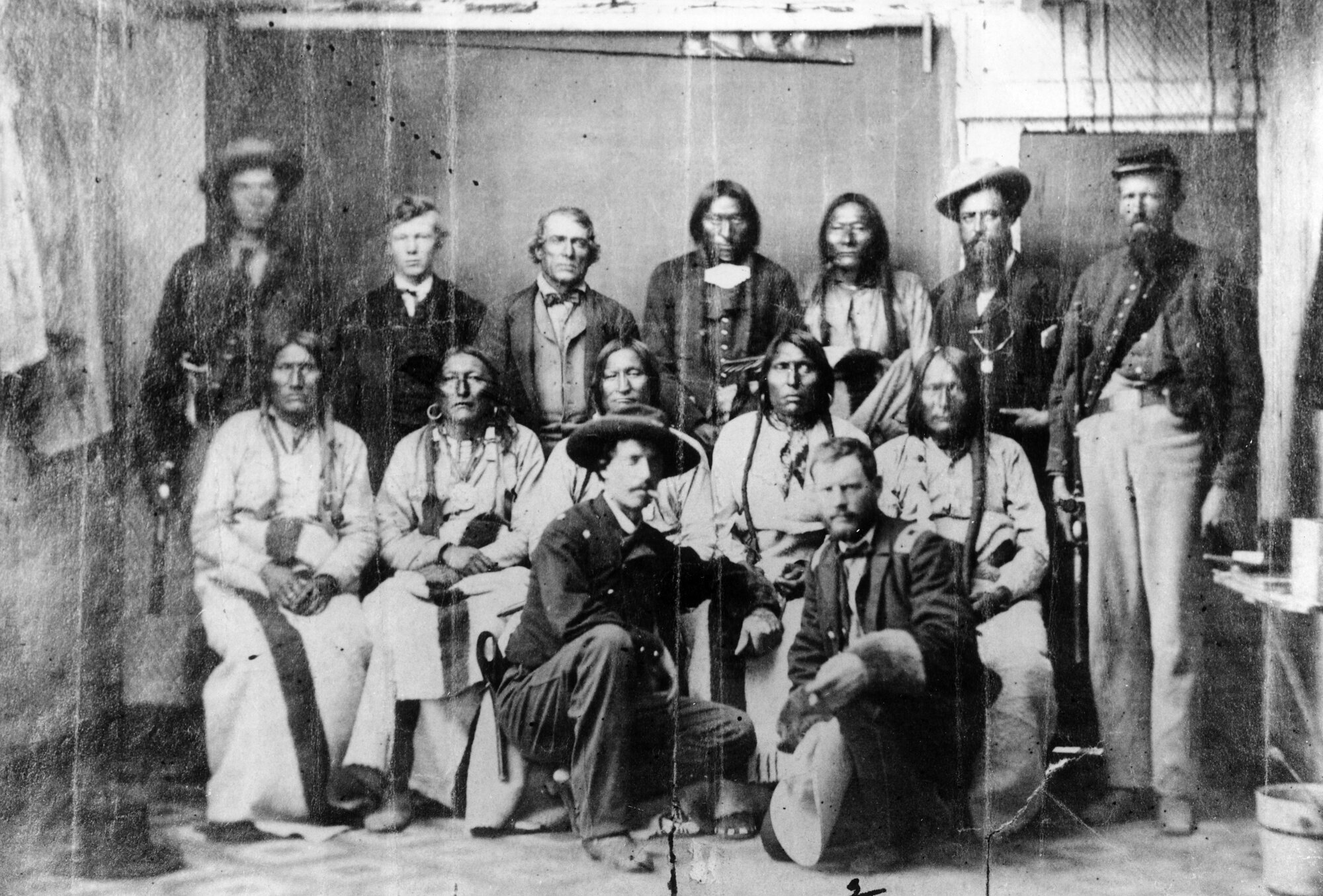
Cheyenne and Arapaho leaders and U.S. officers at the Camp Weld peace council, September 1864
Cheyenne and Arapaho leaders and U.S. officers photographed at the conclusion of the September 1864 Camp Weld council in Denver. (Western History Collection, Denver Public Library)

Perspectives shared with the City of Denver and Denver Broncos

Peace
Camp Weld is very important in our history because it came at a particular time in our history where the Chiefs were looking for peace.

Southern Arapaho Perspective

Historical Context
Camp Weld was a link in the chain to eradicate or move the natives out of Colorado. We were sent to a place that was ideal for a killing field. It turned from Camp Weld on. We were really pushed out of Colorado after Camp Weld.

Southern Cheyenne Elder Perspective

Remembrance
Sand Creek is a sad part of our history and of our lives. I always say that after Sand Creek we treated the government differently because there was no trust there anymore, and even the stories that are told by the elders were always a fact that they were afraid that it would occur again.

Southern Arapaho Perspective

Burnham Yard
It would be better if we could tell more history in Burnham Yard area so that people coming into the stadium or anything like that, they could stop and read, and they would know that they’re standing on a very important part of history.

Southern Arapaho Perspective

Future Engagement
We need to have better communication with each other than try to cover up the past. We need to learn from our mistakes, whichever side you’re on, and go forward because just talking isn’t going to do it. It needs to be both parties sitting at the table, discussing it, and trying to make a better place for our kids, our grandkids, great-grandkids, and for this nation.

Southern Cheyenne Perspective

Historical Significance
Camp Weld, to me, is more important than Fort Chambers because we have a history with Camp Weld. We had chiefs that were in attendance at the Camp Weld Accords, as they call it... I don’t think any Arapaho chief ever saw Fort Chambers.

Southern Arapaho Perspective