For generations, Coloradans blamed Cheyenne and Arapaho people for starting the violence of 1864, often tying the beginning of the conflict to the June 1864 killing of the Hungate family. But Colorado troops—including soldiers based at Camp Weld—had already escalated tensions by launching unprovoked attacks on Cheyenne people that spring, helping precipitate a year of conflict that ultimately led to the Sand Creek Massacre.
Camp Weld and the1864 Conflict
Camp Weld troops helped provoke the 1864 conflict.
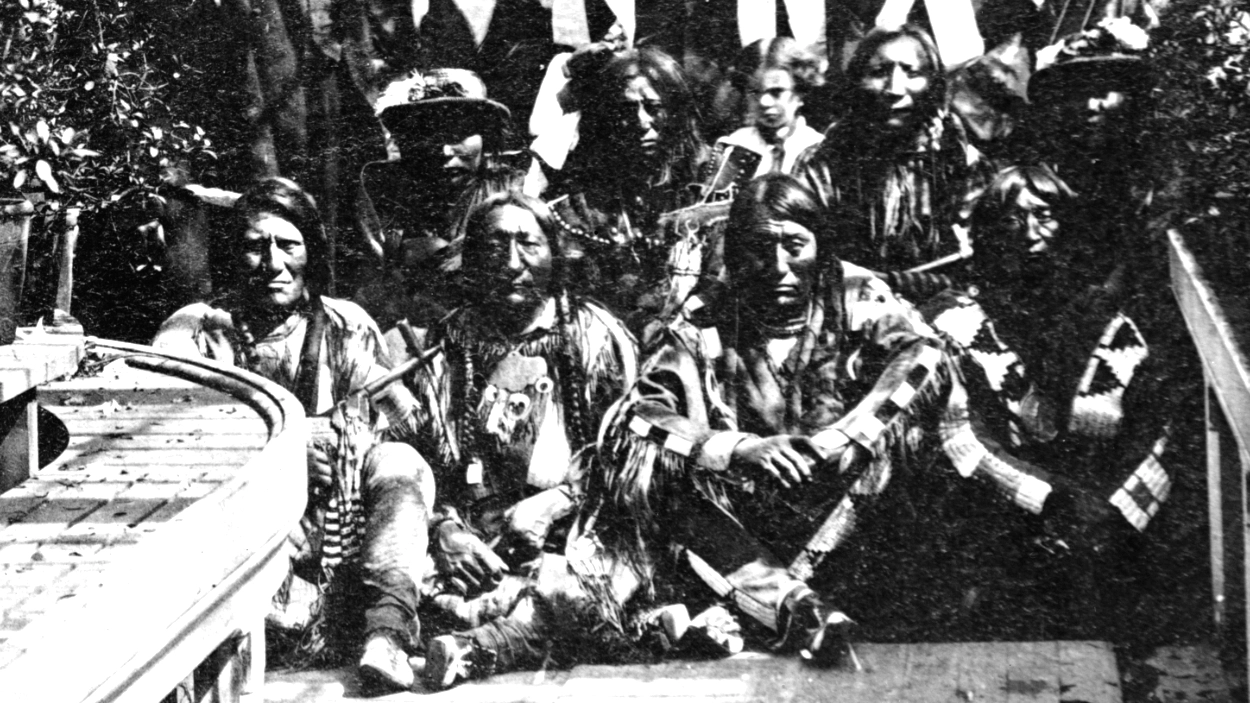
Cheyenne and Arapaho leaders, including Cheyenne Chief Lean Bear, traveled to Washington, D.C., in 1863 seeking peace. The following spring, Colorado troops—including soldiers based at Camp Weld, according to historical sources—launched unprovoked attacks on Cheyenne people that triggered retaliatory raids and disrupted supplies to present-day Front Range settlements. On May 16, 1864, Lean Bear rode out to meet soldiers wearing a peace medal, but troops based at Camp Weld murdered him, according to an account by George Bent published in the Denver Post in 1905.
Western History Collection, Denver Public Library
Camp Weld Troops and the Killing of Lean Bear — How soldiers tied to Camp Weld burned Cheyenne villages and killed Chief Lean Bear in May 1864 as he rode out wearing a peace medal from Abraham Lincoln.
In April and May, soldiers led by Lt. George S. Eayre of McLain’s Independent Colorado Battery—based at Camp Weld, according to a 1910 newspaper account—burned Cheyenne villages and participated in the murder of Lean Bear and another Cheyenne man in mid-May 1864. In a 1905 Denver Post article, George Bent wrote that Lean Bear, who had received a peace medal from Abraham Lincoln during an 1863 visit to Washington, carried papers showing that he was friendly.
Bent, who was living among the Cheyenne before the Sand Creek Massacre, then wrote of Eayre: “He let the chief come up close, then ordered his men to fire. Then the troops shot Lean Bear to pieces as he lay on his back on the ground.”
Jacob Downing and May 1864 Attacks on Cheyenne — How Jacob Downing, whose name still marks a Denver street, tortured a Native man for information and then attacked a Cheyenne village in early May 1864.
Elsewhere, Colorado troops from Denver were escalating violence in the spring of 1864. On May 2, 1864, Jacob Downing—a proud Sand Creek Massacre participant whose name is still on a major city thoroughfare—tortured a Native man to learn the location of a Cheyenne camp. The next day, he led his men to attack the village, with Downing claiming his troops had killed 25 people.
Amid this violence, George Bent, who was living among the Cheyenne before the Sand Creek Massacre, said in the 1905 Denver Post article: “These attacks, and especially the killing of Lean Bear, made the Cheyennes very angry… They began fighting.”
“A White Soldier Fired First” — How Cheyenne Chief White Antelope and a Colorado cavalry officer both said soldiers, not Native people, fired the first shots of the 1864 war.
At the Sept. 28 council at Camp Weld, Cheyenne Chief White Antelope directly challenged Gov. John Evans: “I would like for you to know that this was the beginning of war… as a [white] soldier fired first.” Lt. Clark Dunn, a 1st Colorado Cavalry officer who ordered soldiers to fire in northeast Colorado on April 11, 1864—which an 1867 Indian commission identified as the first start of the 1864 conflict—later confirmed this account in a 1909 interview.
Camp Evans North of Camp Weld — A separate military camp where Third Colorado Cavalry soldiers gathered before many marched to Sand Creek.
Camp Weld was part of a larger Denver military landscape connected to the events leading to Sand Creek. Camp Evans was a separate, temporary military camp from Camp Weld, likely named for Gov. John Evans. It was possibly located in the area near present-day Interstate 70 and Washington Street. It was established on Aug. 24, 1864, about 2 1/2 miles down the South Platte from Denver, and became the main tent camp for much of the newly organized Third Colorado Cavalry during the fall of 1864, according to a diary from Hal Sayr of Gilpin County.
By Sept. 5, newspapers reported about 600 Third Regiment soldiers at Camp Evans “awaiting orders” and preparing to “start on the savage war path.” On Sept. 26, soldiers from the camp paraded through Denver and stopped at Gov. John Evans’ residence, where he praised their service and told them Col. John Chivington would lead them to “hunt out with skill” and pursue and “destroy” hostile Native people.
Two days later, while Cheyenne and Arapaho leaders were seeking peace at Camp Weld, reports of a possible peace nearly caused a mutiny among Third Colorado Cavalry volunteers at Camp Evans.