Help Tell the Fuller History
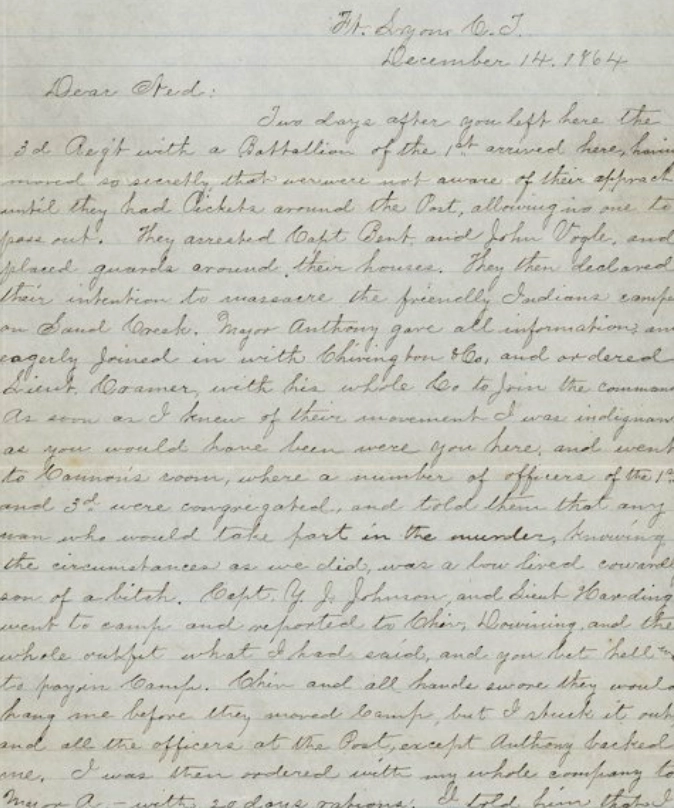
Important historical records often remain preserved within private family papers, photographs, diaries, and collections. In the spring of 2000, handwritten letters by Capt. Silas Soule and Lt. Joseph Cramer were discovered in a trunk in an Evergreen, Colorado, attic. These letters documented how both officers protested directly to Colonel Chivington before the attack, warning him that the assault would be murder, and subsequently refused to let their companies participate in the massacre.
Read before a U.S. Senate subcommittee on Sept. 14, 2000, and reported by Colorado newspapers, including the Rocky Mountain News, these contemporary eyewitness accounts provided crucial evidence about the events at Sand Creek and the internal military opposition to the attack. The letters ultimately proved instrumental in the federal effort to identify and establish the Sand Creek Massacre National Historic Site. Today, the Soule and Cramer letters are a centerpiece of the Sand Creek Massacre exhibit at History Colorado in Denver.
If you have letters, diaries or other materials related to Camp Weld and Sand Creek, please consider sharing them with a public archive, such as History Colorado, to help build a more complete and documented historical record.