On Sept. 28, 1864, Cheyenne Chiefs Black Kettle, Bull Bear and White Antelope, and Arapaho Chiefs Neva, Nat-an-ne, Bossee and Heap of Buffalo met with Gov. John Evans and Col. John Chivington at Camp Weld to seek peace. Their journey to Denver carried immense personal risk. In mid-August, Evans had issued an infamous proclamation calling on citizens to join the Third Colorado Cavalry and “pursue, kill and destroy hostile Indians that infest the Plains for thus only can we secure a permanent peace.”
Peace at Camp Weld
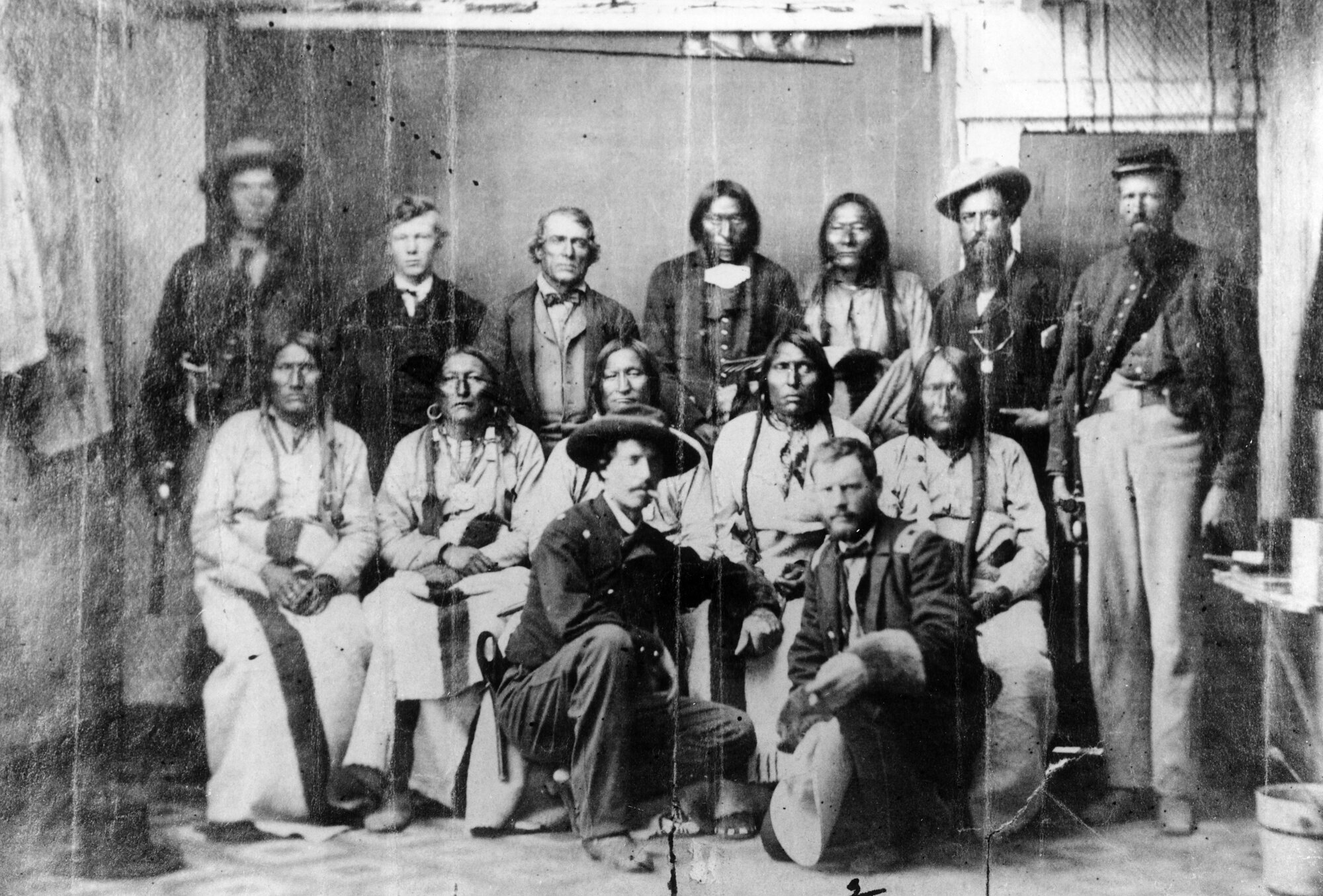
People shown in the photograph are identified as follows: kneeling, left to right: Maj. Edward Wynkoop and Capt. Silas S. Soule. Seated, middle row, left to right: White Antelope (Cheyenne), Bull Bear (Cheyenne), Black Kettle (Cheyenne), Neva (Arapaho), and Knock Knee (Arapaho). Standing, top row, left to right: unidentified, unidentified, John Smith, unidentified, Heap of Buffalo (Arapaho), Bosse (Arapaho), Dexter Colley, and unidentified. Continue below to learn what happened to the people who gathered at Camp Weld.
Western History Collection, Denver Public Library
Cheyenne and Arapaho People Sought Peace at Camp Weld
A Council Documented by Historians — Where Denver's own landmark study, the University of Denver's Evans report and other histories document the Camp Weld council's significance.
The historical significance of the September Camp Weld peace council has been extensively documented in books, public-history studies and academic reports, including:
- “We are the Land” by the City and County of Denver
- “John Evans Study Report” by the University of Denver
- “Sand Creek: Tragedy and Symbol” by Gary Roberts
Coloradans, as Morse Coffin of present-day Longmont recalled, were in no mood for peace: “At the time the 3rd Colorado Regiment was raised, the idea was very general that a war of extermination should be waged.”
I Came Here to Seek Peace and Nothing Else — What Black Kettle, Neva and other leaders said inside the Camp Weld council, and how troops camped nearby reacted to talk of peace.
Before the Camp Weld council began, Major Edward Wynkoop met privately with Evans. Wynkoop—who had convinced Cheyenne and Arapaho leaders to travel to Camp Weld—later testified that Evans told him: “[The Third Regiment] had been raised to kill Indians and they must kill Indians,” and later asked, “What shall I do with Third Regiment, if I make peace?”
During the council with Evans and Chivington, Cheyenne Chief Black Kettle eloquently asked for conciliation: “We have come with our eyes shut, following [Major Wynkoop's] handful of men like coming through the fire. All we ask is that we may have peace with the whites.”
Arapaho Leader Neva—who was sent to Camp Weld by his brother, Chief Nowoo3 (“Niwot,” Left Hand)—also came seeking peace: “I am determined always to keep peace with the whites. Now, when I shake hands with them they seem to pull away. I came here to seek peace and nothing else.”
Nearby at Camp Evans, where much of the Third Colorado Cavalry was camped, news that peace might be reached at Camp Weld reportedly caused such anger among the soldiers that the camp nearly erupted in mutiny. Many of those soldiers would later participate in the Sand Creek Massacre. The Rocky Mountain News, however, assured them they would still have an opportunity to fight Native people.
Peace Was Refused — How Gov. John Evans rejected peace at Camp Weld and how a 2014 University of Denver report later judged his actions.
Ultimately, Evans refused to make peace at Camp Weld. After the conference at Camp Weld, Evans wrote: “I have declined to make any peace with them, lest it might embarrass the [Third Regiment] military operations against the hostile Indians of the plains… My talk with them was for the purpose of ascertaining their views, and not to offer them anything whatever.”
The 2014 University of Denver report examining Evans’ actions in 1864—including a full chapter on the September Camp Weld conference—concluded: “Evans abrogated his duties as superintendent, fanned the flames of war when he could have dampened them, cultivated an unusually interdependent relationship with the military, and rejected clear opportunities to engage in peaceful negotiations with the Native peoples under his jurisdiction.”