Visual Memory of Camp Weld
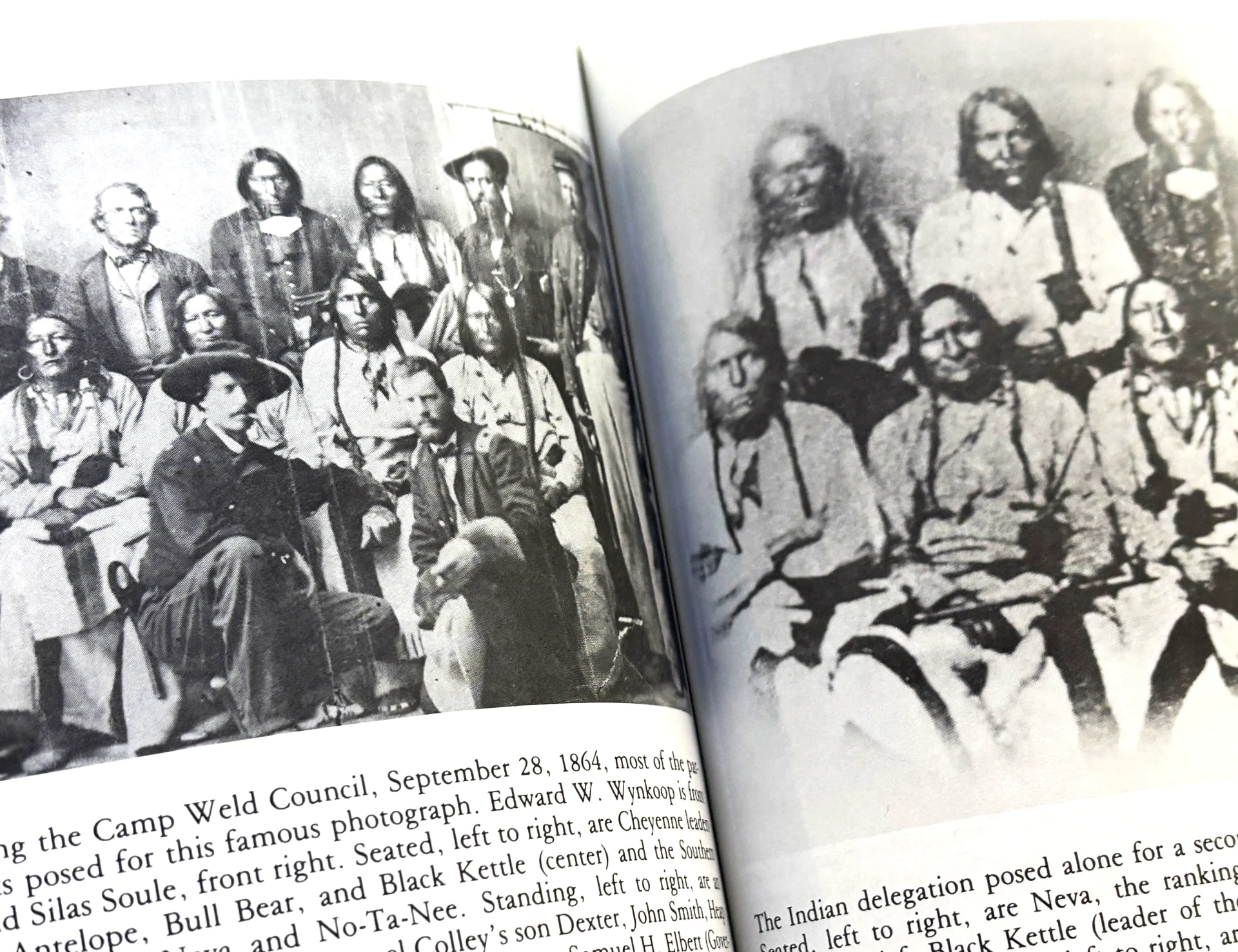
Camp Weld survives in Denver’s historical memory not only through written records, but through an extraordinary visual record created during and after its history. Photographs from the September 1864 peace council became some of the most recognizable images connected to Camp Weld and the events leading to the Sand Creek Massacre.
A Southern Arapaho Elder told the City of Denver and the Denver Broncos in July 2026 that the historic photograph taken at the conclusion of the Camp Weld peace council tells a powerful human story. It depicts Cheyenne and Arapaho leaders alongside U.S. military officers—including Maj. Edward Wynkoop and Capt. Silas Soule, who was later assassinated near 15th and Arapahoe on April 23, 1865—following their efforts to secure peace. There is also a from the same session that focuses exclusively on the Cheyenne and Arapaho delegates.
“It’s very fortunate that somebody took pictures of all those in attendance, and it has very important figures in that picture,” the Southern Arapaho Elder said. “You can’t deny this picture.”
Historical accounts differ regarding the photographer. Many sources credit George D. Wakely, a Denver photographer who was also the father-in-law of Major Edward Wynkoop. However, on October 7, 1864, the Rocky Mountain News reported that the studio of Faul & Newbury had produced “a large card containing the most clear and striking likenesses of those seven Indian chiefs who were in town last week,” suggesting they may have taken the portraits.
In addition to the studio portraits, held by History Colorado depict members of the Cheyenne and Arapaho delegations traveling in horse-drawn carriages through Denver. These images provide a rare, candid view of the delegation’s movement during their visit to the city.