Camp Weld in Denver versus Fort Chambers near Boulder
Tribal Representatives from the Cheyenne and Arapaho Tribes, Northern Arapaho Tribe and Northern Cheyenne Tribe have participated in in-depth consultations with the City of Boulder since March 2022 regarding Fort Chambers, a site with deep connections to the Sand Creek Massacre.
Tribal Representatives from the Cheyenne and Arapaho Tribes told City of Denver staff and Denver Broncos in July 2026 that Camp Weld is just as important—if not more important—than Fort Chambers near Boulder.
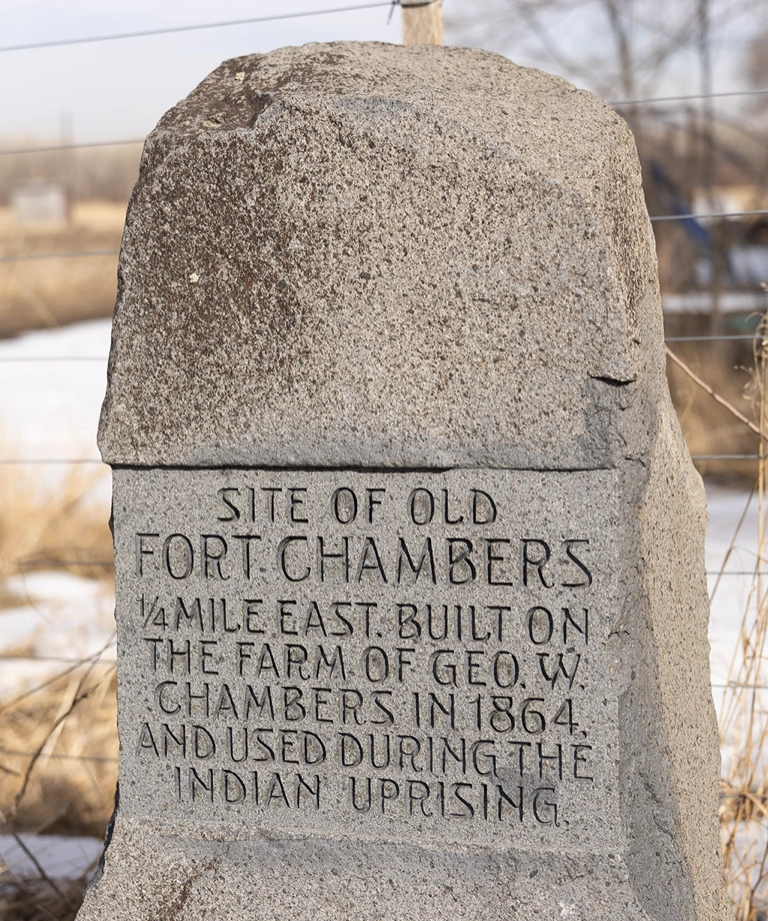
In June 1864, Boulder community members built Fort Chambers amid anti-Native hysteria and exterminationist rhetoric. Two months later, more than 100 men from across Boulder County mobilized as Company D of the Third Colorado Cavalry. On Oct. 10, 1864—12 days after Cheyenne and Arapaho chiefs sought peace at Camp Weld—Company D soldiers launched an unprovoked attack on a Cheyenne camp at Buffalo Springs, killing and mutilating 10 Cheyenne men, women and children. Men from Company D later participated in the Sand Creek Massacre on Nov. 29, 1864, with the Boulder Community immediately defending the massacre in January 1865 and celebrating it through at least 1959 when community members erected a monument honoring Fort Chambers.
Following extensive Tribal consultation and community engagement, the City of Boulder released an interpretive framework for the Fort Chambers site to guide an interpretive trail centered on learning, reflection and the land’s connections to the Sand Creek Massacre.